 大历史在线
大历史在线

Modern Man In The Sense Of Anatomy
Author:卜可Published:September 27, 2025Updated:February 5, 2026
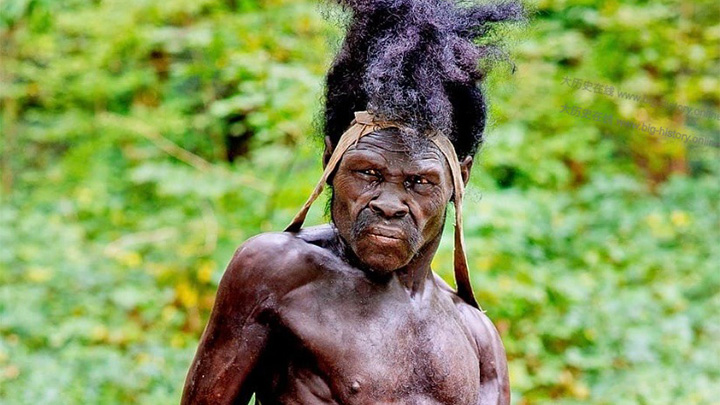
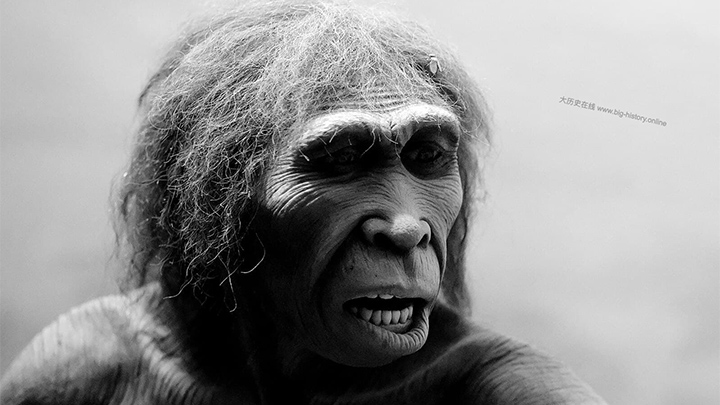 GenusMarch 12, 2026"Human" is only a term in the traditional sense, and from a genealogical point of view, it is very imprecise. In a narrow sense, human beings refer to all the people who have existed in history so far. However, human beings in biological taxonomy refer to "human genus", or "true genus". There are 17 known species, and modern people are only one of them.
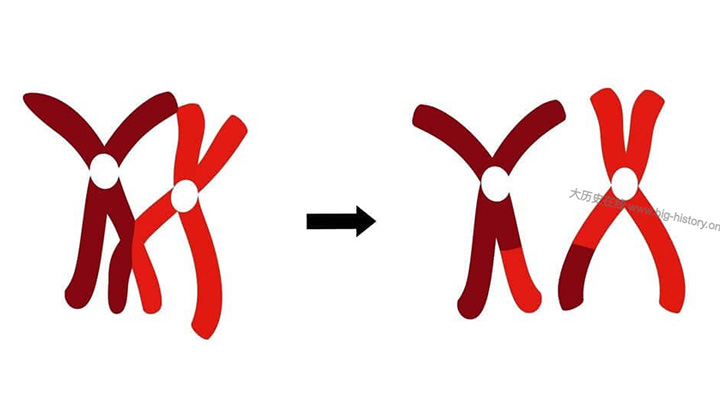 Recent common ancestor based on chromosomes 1-22February 26, 2026Interpreting the recent common ancestor of human autosomes 1-22 from a genomic perspective, explaining DNA recombination, mutation and ancestral fragment inheritance, and popularizing the common ancestor time in the sense of human genetics.
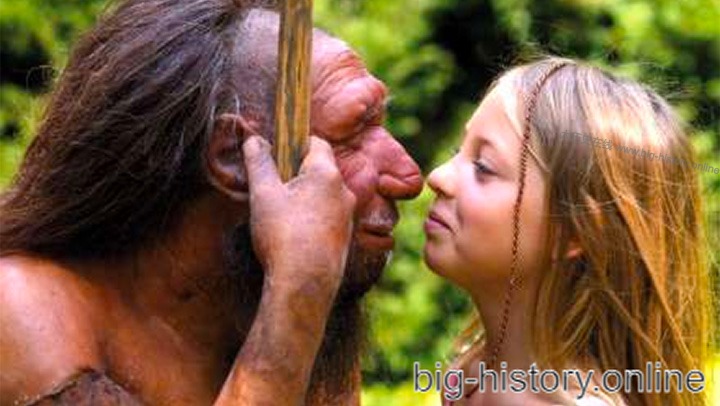 The Evolution of Modern ManMarch 12, 2026770000 to 550000 years ago, the ancestors of modern humans diverged from those of Neanderthals and Denisovans, but there was no complete "reproductive isolation" between the three subspecies ". In fact, from a genetic point of view, they are just a "weaker" ancestor of modern people tens of thousands of years ago. Every modern person has more or less their genes in his body.
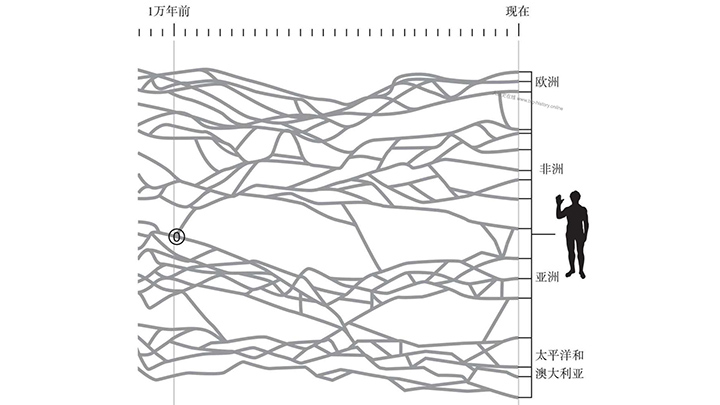 The MRCA of modern humansFebruary 27, 2026What is the most recent common ancestor (MRCA) of modern humans? How is it different from Mitochondrial Eve and Y-chromosome Adam? This article uses popular logic to explain the mystery of the common ancestor of all mankind.
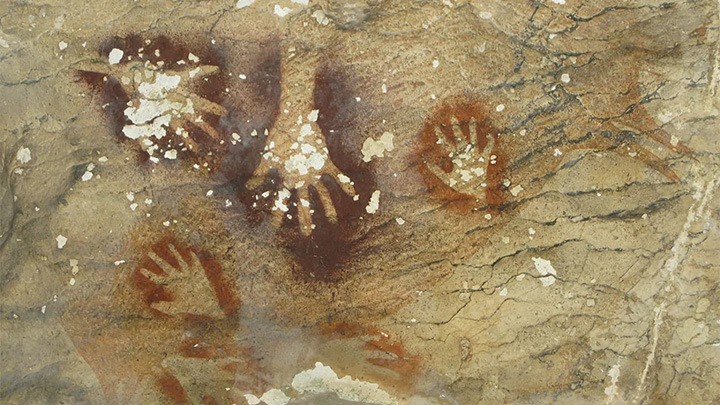 Late Paleolithic RevolutionFebruary 28, 2026About 50000 years ago, our race experienced something very special: just as Athena in Greek mythology injected soul into mankind, mankind suddenly possessed unprecedented figurative artistic creativity. This event, known as the "Late Paleolithic Revolution", is a watershed in the history of human evolution.
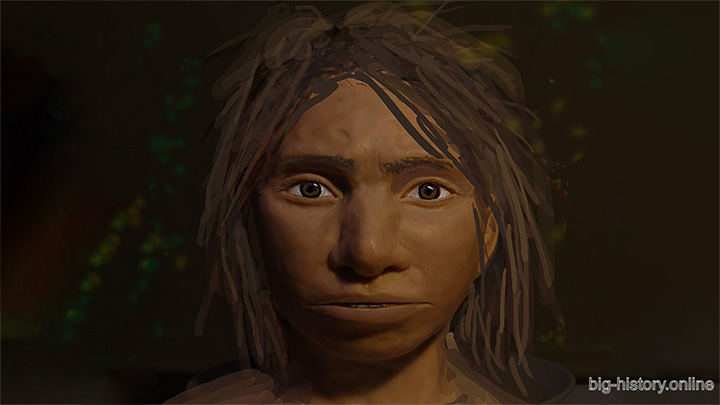 Denisovans mixed with modern peopleMarch 12, 2026Denisovans are an ancient human species discovered through DNA analysis. They coexisted with Neanderthals and modern humans and interbred with both. This paper provides a detailed analysis of gene flow, the EPAS1 gene on the Tibetan Plateau, the Xiahe mandible, and the distribution of ancestral components across global populations.
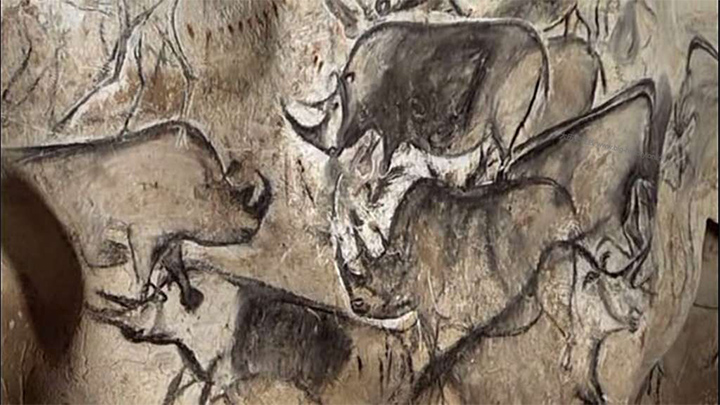 Orina CultureMarch 4, 2026What is Aorina culture? Age, distribution, tools, murals and sculptures (Chauvius Caves, Lions, Hochler Fellows Venus).
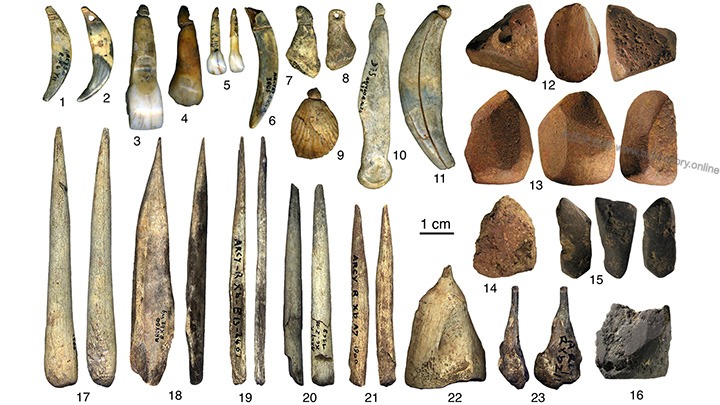 Chartres-Péronne cultureMay 15, 2026Exploring the Châtelperronian culture of the Upper Paleolithic. As the final cultural testament to the Neanderthals, it illuminates the enigmatic history of two human species—Neanderthals and anatomically modern humans—whose paths converged, competed, and ultimately交融ed in Europe, as evidenced by the points and bone tools from the Fairy Cave site.
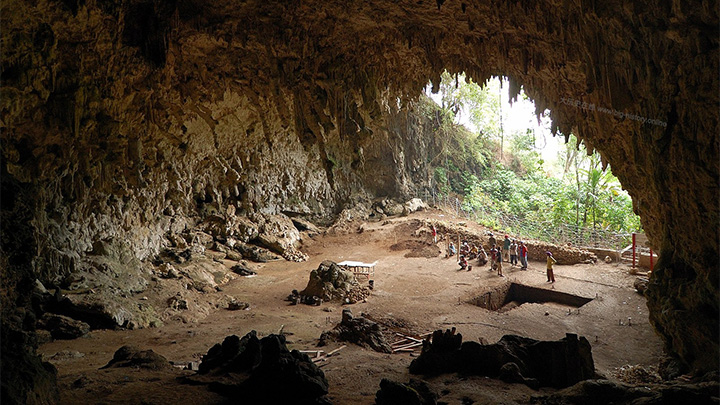 The Hobbit ExtinctionMarch 12, 2026Who were the Flores (Hobbits)? Why were they short? When did they become extinct? This article describes the fossils, evolution and extinction of this mysterious dwarf human.
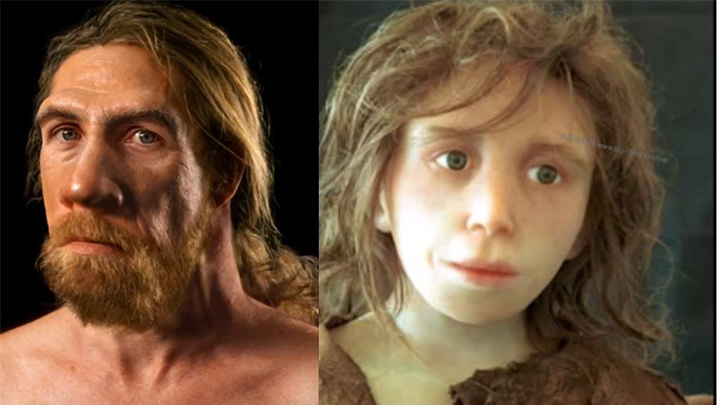 Neanderthals mixed with modern humansFebruary 27, 2026Are modern people mixed with Neanderthals? How many Neanderthals genes do Europeans, Asians and Africans each contain? This article understands the history of gene exchange and evolution between humans and Neanderthals.
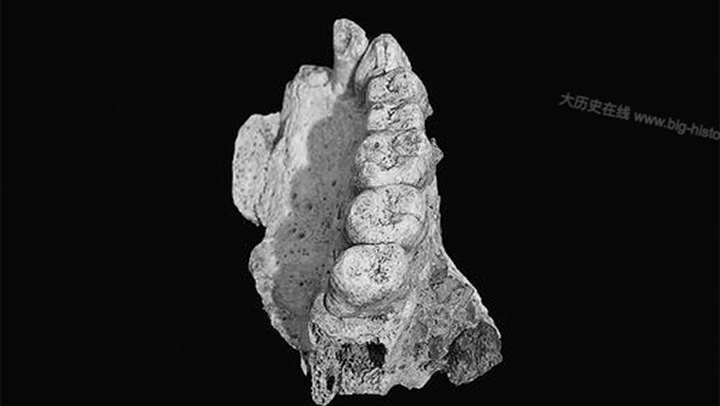 The earliest modern humans outside AfricaMarch 4, 2026Where are the earliest modern fossils outside Africa and how many years ago? This article introduces key sites such as Kafze and Misria, and combs the real timeline of modern people coming out of Africa.
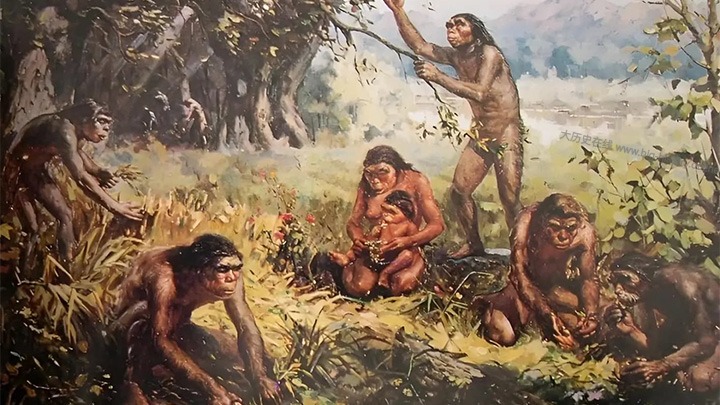 The first human out of AfricaFebruary 26, 2026The ancient fossils unearthed from various places can prove that the expansion of the genus of Man began as early as 2 million years ago. At the latest, 1.8 million years ago, the first time that the man's subordinate, the erectus, came out of Africa. It can be said that this is one of the largest geological and historical events in the history of the earth.
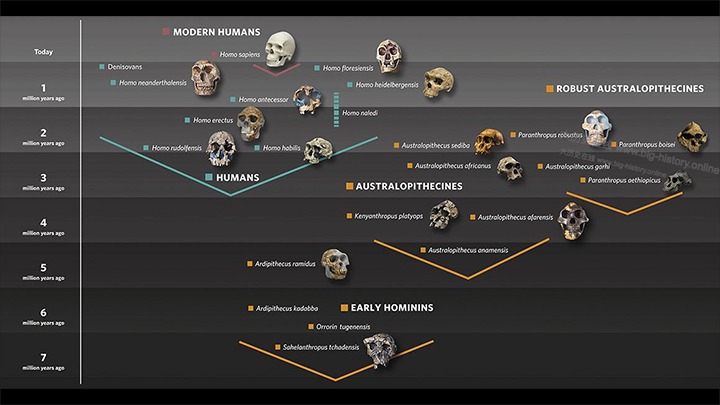 The Birth of MankindFebruary 26, 2026Human beings used to think that they were very "advanced" and different, a special existence created by "gods" according to their own image or preferences, but since the era when Darwin published the Origin of species, people's traditional cognition of the origin of life has been subverted. Now we know that the history of mankind is not long, only about 7 million years.
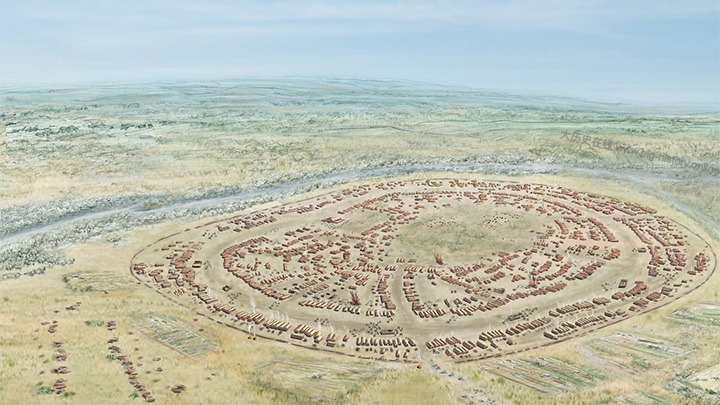 Kerkerani cultureJune 4, 2026The Cucuteni–Trypillian culture is one of the most significant archaeological cultures of late Neolithic and Chalcolithic Europe, spanning the territories of present-day Romania, Moldova, and Ukraine. This article examines its painted pottery art, monumental settlements, religious beliefs, the phenomenon of house burning, and the ultimate process of its decline, thereby elucidating the developmental apex of prehistoric agricultural civilization in Europe.
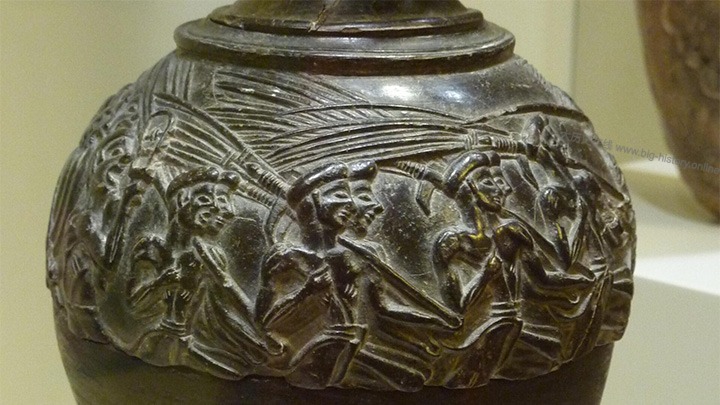 Agriculture emerged in Greece and the Aegean Sea region.June 14, 2026From about 7000 BC to 6500 BC, early farmers from Anatolia crossed the Aegean Sea and brought mature wheat and livestock technology to the Greek peninsula. From the early domestication remains at Franchthi Cave, through the settled villages of Sesklo, to the rise of the Minoan civilization on Crete, this article takes you on a journey to explore the ancient origins of agricultural civilization in Europe.
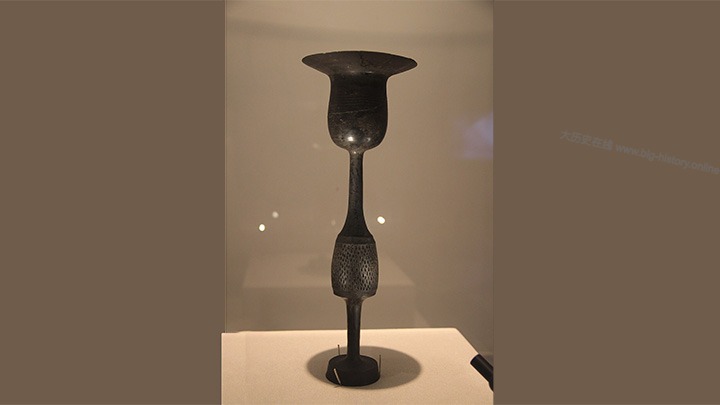 Longshan CultureJune 5, 2026The Longshan Culture is one of the most important archaeological cultures of the Late Neolithic period in China, dating from approximately 4,500 to 4,000 years ago. This article systematically examines the origins and geographical distribution of the Longshan Culture, its black‑ware pottery techniques, social stratification, the emergence of proto‑writing, prehistoric urban sites, and its relationship with the Erlitou Culture of the Xia Dynasty, thereby illuminating a crucial phase in the formation of Chinese civilization.
Related recommendations
 WeChat Mini Program
 Big History Online